The Smiths extended family comprises of:
Roots in Northamptonshire
The Smith family per se has its roots in Weston cum Sutton (first mentioned in a will 1675), now Weston by Welland and Sutton Bassett. The line carries on through Middleton (Cottingham cum Middleton) to London.
Weston by Welland and Sutton Bassett appear in the Domesday Book as Westone and Sutone. In 1086 there were two tenant-in-chiefs – Robert de Bucy and Countess Judith, the neice of William I
1086 – Sutton Bassett – The land of Robert de Bucy, Tenant-in-chief and Lord. 8 Freemen, 2.5 ploughlands, 2.5 mens plough teams. Annual value to the Lord 1l 1s 2p
1066 the Lord was Northmann, land value 5s.
1086 – The land of Countess Judith, Tenant-in-chief and Lord 4 Freemen, 1.5 mens plough teams. Annual value to lord 10s 7p
1066 the Lord was Earl Waltheof.
1086 – Weston by Welland – the land of Robert de Bucy, Tenant-in-chief and Lord 10 Freemen, 6 ploughlands, 3.5 mens plough teams. Annual value to the Lord 2l 2s 7p 1066 – Value 10s to Northmann.
1086 – land of Countess Judith, Tenenat-in-chief and Lord. 5 Freemen, 1.5 mens plough teams. Annual value to the Lord 1l 1s 2p
Information. Ploughlands, carucates, hides – ploughland was an area that could be ploughed by 8 oxen in a year, generally about 120 acres depending on the quality of the land. Plough Teams – groups of 8 oxen sometime belonging to the Lord or peasants.
Weston by Welland and Sutton Bassett are within half-a-mile of one another. Sutton Bassett is the smallest and a chapelry of Weston by Welland. Agriculturally they were one physical community. Some of the furlangs and fields cross the parish boundaries and both were inclosed together.
1590 – there were 21 males in Weston and 8 in Sutton, the population of both villages always being small.
1650-1800 – 48 Smiths were baptised, 28 married and 34 burials were recorded.
1881 – the population of Weston was 215 of which 26 were Smiths and Sutton 116.
2001 – the combined poulation was 141 raising to 246 in 2011.
After the Black Death, many peasant families were able to farm more land, rising to the level of Yeoman. ‘Yeoman’ has changed in meaning over the years until the Tudor period when it widened to include the prosperous working farmers below the rank of minor gentry. They worked their own land but may not have been freeholders. They increasingly held their land by a variety of tenures. The term informally distinguished them as a farmer who was more prosperous than a husbandman (the average farmer in his local area). In the 18th and 19th centuries the two terms were gradually abandoned in favour of the term ‘farmer’.
In 1831 more than 50% of males over 20 were employed as agricultural labourers, just under 25% were farmers employing labourers and about 10% were farmers not employing labourers.
Wills and Deeds show their occupations, Yeomen and Grazier while other records show that members of the SMITH families included a Wheelwright, Parish Clerk, and a Weaver.
It is quite probable that the acreage shown in the Agricultural Census of 1952 has changed little over the generations.
| Agricultural Census 1952 Ref: ZB 291/406 | ||
| Items | Weston by Welland 146/123 | Sutton Bassett 146/20 |
| Acres of crops | 1135.5 | 898 |
| Regular workers | 10 | 11 |
| Cattle and calves | 603 | 497 |
| Pigs | 29 | 73 |
| Sheep and lambs | 558 | 254 |
| Horses | 8 | 4 |
| Poultry | 1141 | 140 |
| Acres of crops and grasses | 9 | 5 |
| 12 of peas for human consumption | ||
| Clover grasses |
147 acres / 40 tons |
|
There is evidence to suggest Weston cum Sutton, as a strong, stable agricultural community showed a combination of kinship and neighbourliness. This neighbourhood and its neighbourliness were strong. Marriage partners were mostly drawn from it and the bond that strengthened it came from the intermarriage of the core families – SMITHs, TEBBATTs, BARWELLs, KENDALs of Sutton Bassett and the SMITHs, ROWLATTs, TALBOTs, ASHBYs, SCOTTs of Weston by Welland. There is even a record of a SMITH of Weston by Welland marrying a SMITH of Sutton Bassett. Evidence is present in marriage records of intermarriage the above families including acting as witnesses.
Where the SMITH’s are mentioned in the records for both villages it is highly probable that they were related families owning/occupying land in both parishes. There is evidence in the Wills and Inventories that a majority of the land was freehold and that they held significant assets in real and personal estate.
Records mentioning early Smiths
1524 – Tax Assessment records – Thomas and Roberto Smyth (Smith).
1583 – The marriage of Thomas and Agnis, the burial of Cassander wife of William.
1590 – No Smiths are recorded in either village.
1600 – A will for J. Smith.
1616 – A will for William Smith of Sutton Bassett.
1621 – A will for Thomas Smyth of Sutton Bassett.
1672 – A will for Mary Smith, Spinster of Sutton Bassett.
Lineage
| Grand Parents | Name | Birth/Baptism Place | Dates | Married | Spouse |
|---|---|---|---|---|---|
| Great x9 | John Smith | Sutton Bassett | c.1620-c.1699 | c.1664 | Anne Buzzell of Great Bowden OR Alice Broughton of Sutton Bassett |
| Great x8 | William Smith | Sutton Bassett | c.1664-c.1707 | c.1680 | Elizabeth of Cottingham |
| Great x7 | John Smith | Sutton Bassett | c.1682-1786 | 1706 | Anne Denshaw of Leicester |
| Great x6 | John Smith | Sutton Bassett | 1710-1786 | 1730 | Sarah Haddington of Medburn, Leics |
| Great x5 | John Smith | Sutton Bassett | 1733-1806 | 1755 | Mary Simms of Billesden |
| Great x4 | Joseph Smith | Weston by Welland | 1758-1834 | 1789 | Mary Riddell of Cottingham |
| Great x3 | John Riddle Smith | Middleton (Cottingham cum Middleton) | 1796-1865 | 1825 | Mary Ann Brown of Weldon |
| Great x2 | John Smith | Middleton | 1836-1906 | 1863 | Sabina Seage of Chittlehampton, Devon |
| Great | John Smith Seage | Exeter | 1854-1921 | 1880 | Elizabeth West of Bethnal Green |
| Grand Parents | John William Seage (William John Smith) | Bethnal Green | 1886-c.1950 | 1912 | Frances Betsy Fenn of Edmonton |
| Father | Thomas Leslie Smith | Haringey | 1919-1997 | 1945 | Agnes Saxon of Whelley, Wigan |
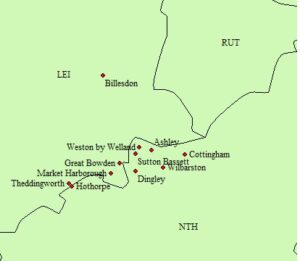
Key Parishes and Villages
The Riddells.
The Riddells ahve a strong connection with the hamlet of Middleton back as afr as the C16th. In 1727 William Riddell, my Great x7 Grandfather founded a charity, leaving a sum of money and a field for the training of apprentices of Middleton. In return he asked that the trust look after his, and others of his families’ graves in Cottingham churchyard. Almost 300 years later it is still safeguarding the capital sum and the field, still dealing with applications for apprenticeships.
there are indications that the Riddell family arrived in England in 1066 from Aquitaine. there are connections through Scotland, Northumberland, Peterborough, Wittering and Oundle.
An ancestor may have been Abbot of Peterborough.
The London Connection starts in Northamptonshire with the Riddle Smith/Brown partnership, through the Smith/Seage partnership to the Smith Seage/West partnership in Bethnal Green.
Seage Roots
Reserching the origins of the family name – Seage – is fraught with difficulties and may never be fully answered.
The family name – Seage has several recorded spelling variations. The further back we go the records show ‘Saige’, ‘Sayge’, ‘Siege’, ‘Seige’, ‘Sage’ sometimes with ‘le’ in front. These variations can be, in part, the results of varying levels of literacy, dialect, how the name has been pronounced, and what the listener hears and translates into writing.
Seage may be a locative name. research indicates that it may come from a lost place in Topsham, Devon which was recorded in the 13th century as la segge (akin to Middle High German). This comes from the Middleenglish segge – sedge reed, and in Old english secg for someone who dwells where sedge or reed grows. The Middle English segge can also mean seat; or ground on which a ship lies. (Old French sege).
Sedge is also an obsolete spelling of siege.
Based on the above the origin could be:
- John of Sedge
- John la Segge (Richard de la Seg – 1280, Devon)
- John Segge (Thomas atte Segh – 1308, Worcestershire)
secg can also mean – man, warrior, hero, sword.
Seage – West frisian for saw, in Welsh – Llif, in French séage.
Old Scottish – segge, sege, seigie, seag(i)e, saig(e), seedge, sei(d)ge.
Old Cornish – seagie
Irish – seágh
Sege is a city in Sweden
Saige is a female given name.
Saigge in German
Siege
Old French from sieger (assegier), besiege, lay siege to. Alternative Syege 15th and 16th century origins. Middle English sege from Old French and Anglo Norman.
German sieg meaning victory. siegen to be victorious, to win.
Obsolete meaning rank, grade, station.
Sieg is a river in Germany, Siegen a city on the river in Westphalia, North Rhine region.
Seige
Estonian seig – back, spine, back of; but also – clear.
Devon (Dyfneint – deep valley dwellers) was part of Dumnonia which included present day Cornwall and parts of Somerset and Dorset. ‘Devonians’ are genetically descended from Brythonic Celts.
Devon was one of the last areas to be conquered by the Saxons and one of the last places to speak the Celtic language in England. It probably died out around the 1400’s. traces can still be found in the dialect, mainly because of the slow rate of Saxon sttlement.
The Devon dialect has its roots in a variation of a much older variation of English, mstly derived from Old English and Saxoin roots. there is also some influence from the Welsh and Cornish languages.
The relative isolation of Devon meant that the dialect flourished well into the 19th century. It is now classed as part of the Southwestern dialect.
‘Devon Talk’ has a much slower rhythm than other areas with its lengthening of the vowels. ‘S’ pronounced as ‘z’ or ‘f’; ‘r’s stressed more than Standard English.
Objects are refered to using the male gender ‘he’ rather than a neutral’one’.
An ‘a’ may be added toa word – ‘a-went’ meaning gone. ‘They’ may be used in the place of ‘them’.
Chittlehampton
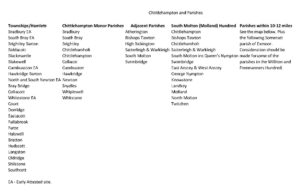
Chitlehampton Parish, an ecclesiastical parish is the hub for Seage genealogical research. Its townships/hamlets are listed below in the spreadsheet.
The village of Chittlehampton (Citremetona in 1086, Chythampton in 1461) has been in existence since at least 700ce.
The Domesday Book had a recorded population of 37 households in 1086, putting it in the largest 20% of settlements recorded in Domesday.
Land of Godwin (of Chittlehampton)
Households
- Households: 7 villagers. 8 slaves. 22 other population.
Land and resources
- Ploughland: 30 ploughlands. 5 lord’s plough teams. 10 men’s plough teams.
- Other resources: 5.0 lord’s lands. Meadow 12 acres. Pasture 9 * 3 furlongs. Woodland 1.5 * 0.5 leagues.
Livestock
- Livestock in 1086: 4 cattle. 3 pigs. 60 sheep.
Valuation
- Annual value to lord: 7 pounds in 1086.
Owner – Godwin (of Chittlehampton).
- Lord in 1066: owned 5 places
- Tenant-in-chief in 1086: held land in 13 places directly from the crown
- Lord in 1086: immediate lord of 14 places paying tax to the Tenant-in-Chief (himself, except for Buckland (St Mary) in Somerset
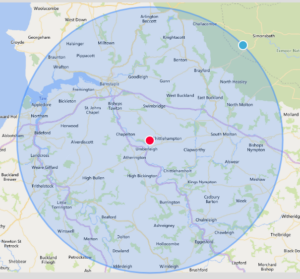
The major genealogical research of my Seage families being centred on Chittlehampton parish its adjacent parishes and those in the South Molton Hundred have to be considerd also. In addition parishes within a 10-12 mile radius are also a part of that research. Members of these families married into and out of the parish.
- Marriage partners were normally found within what was called ‘their country’ to which the parish belonged and based upon the nearest market town. In this case Newton has a market but South Molton is the major market town.
- Partners were often found within a 10-12 mile radius. men often married in the bride’s parish.
- Marriage records often give the residency of the couple at the time of the marriage, but, this doesn’t imply they were born there.
Below is a spreadsheet and map listing the parishes/places withi a 10-12 mile radius. The map includes Somerset from which the Exmoor parish and parishes from the Williton and Freemanners Hundred should be considered.
Seages 1841

Overall the Seage surname in the 19th centurywas as follows:
69 in Devon, 1 in Gloucesteshire, 3 in Somerset, 1 in in North Riding, and 40 in West Riding, Yorkshire.
Seages 1861
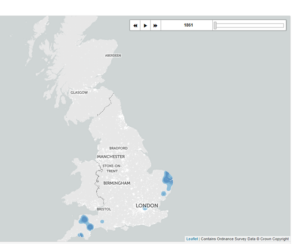
Seages in Devon in 1881
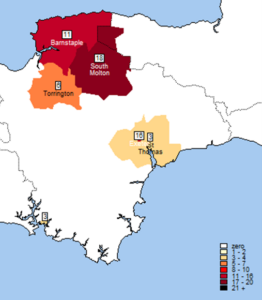
The 1939 Register of England and Wales shows 158 Seages, 36 of which are in Devon, 1 Siege, 4 Seige, 2 Sayge.
Seages Present Day
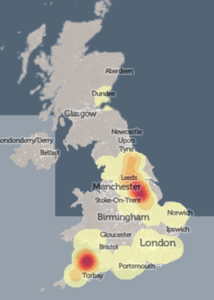
'Seage' Possible Distribution 2014
| Country | Seage | Seige | Siege | Saige | Sayge |
|---|---|---|---|---|---|
| Australia | 285 | ||||
| England | 146 | 1 | 2 | 1 | 1 |
| South Africa | 143 | 10 | 1 | ||
| US | 107 | 11 | 125 | 177 | 20 |
| Turkey | 77 | ||||
| Spain | 64 | ||||
| Papua New Guinea | 5 | 51 | |||
| Japan | 42 | ||||
| Argentina | 39 | ||||
| Wales | 36 | ||||
| Mauritania | 11 | ||||
| Switzerland | 10 | ||||
| Uraguay | 9 | ||||
| Canada | 9 | 8 | 3 | 1 | |
| Liberia | 8 | ||||
| China | 6 | ||||
| Czechia | 5 | ||||
| Brazil | 4 | 2 | 1 | ||
| Ethiopia | 4 | ||||
| Morocco | 4 | ||||
| Kenya | 4 | ||||
| Sweden | 3 | ||||
| Malaysia | 3 | ||||
| Scotland | 2 | ||||
| Taiwan | 2 | ||||
| Belgium | 2 | ||||
| Indonesia | 2 | ||||
| Phillipines | 1 | 1 | 3 | ||
| Germany | 1 | 8 | 57 | 1 | |
| France | 1 | 2 | 4 | ||
| Fiji | 1 | ||||
| Thailand | 1 | 1 | 5 | ||
| Belize | 1 | ||||
| India | 1 | ||||
| Ivory Coast | 1 | ||||
| Columbia | 1 | ||||
| Nicaragua | 1 | ||||
| Venezuala | 1 |
Sources
calcmaos.com/map-radius/
genuki.org.uk/big/eng/DEV
epns.nottingham.ac.uk/browse/devon/Chittlehampton
Phillimore Atlas and Index of Parish Registers
Surname Atlas – Archer Software
Occupations etc. shown in the records give us (not in any particular order):
Master Carpenter with Apprentices,Cabinet Maker/Plasterer/Decorator, Competent Man (More versatile and experienced than a jack-of-all-trades), Builder, Cooper.
Servant, Seamstress, Dress Maker, Footman, Policeman, Milliner.
Parish Clerk, Churchwarden, Overseer and Assistant Overseer of the Poor.
Blacksmith, Wheelwright, Whitesmith, Coach Smith, Printers Engineer, Master Smith employing 2 men and 3 apprentices. Ironworkers and Machinists.
Glover, Labourer,Forewoman, Publican, Drapery Shop Assistant.
Journalist and Author, Assurance Agent, Cook, Coffee House Keeper, Stationer, Banker, Musician and Musical Director, Campanogram Band members.
There is evidence to suggest Chittlehampton was an agricultural community. Marriage partners were mostly drawn from within but also from other parishes around.
Kinship through Marriage Partners and Parishes. These are listed from two Seage family lines, George saige c.1632 and Thomas Seage c.1558 which merge with the marriage of William and Mary seage in 1789. These are
| George Saige c.1632 | Thomas Saige c.1558 | |||
|---|---|---|---|---|
| Year | Partner | Parish | Partner | Parish |
| 1558 | Unknown | Chittlehampton | ||
| 1612 | Johane ? | Chittlehampton | ||
| 1632 | Unknown | Chumleigh | ||
| 1637 | Phillip Boyles | Warkleigh | ||
| 1651 | Johane Ferrett | Warkleigh | ||
| 1656 | Grace Payne | Chumleigh | ||
| 1674 | Unknown | Warkleigh | ||
| 1689 | Richard Downeman | Chittlehampton | ||
| 1701 | Agness ? | Chittlehampton | ||
| 1707 | Joan Shapton | North Molton | ||
| 1733 | Anne Skinner | Chittlehampton | ||
| 1738 | Mary Pickett | Chittlehampton | Mary Pickett | Chittlehampton |
| 1738 | Susanna ? | Chittlehampton | ||
| 1760 | Ann Downes | Chittlehampton | ||
| 1762 | Ann Loker | Chittlehampton | John Blackmore | Chittlehampton |
| 1789 | Mary Davy | Chittlehampton | ||
| 1789 | William Seage | Chittelhampton | Mary Seage | Chittlehampton |
| 1816 | Richerd Milford | High Bickington | ||
| 1824 | Hannah Lock | South Molton | ||
| 1824 | Ann Phillips | South Molton | ||
| 1844 | Epaphras Seage the Younger | Chittlehampton | ||
| 1850 | James Westen | Langtree | ||
| 1851 | James Benjamin Pepper | Maidstone | ||
| 1858 | Maria Nun | Exeter | ||
| 1859 | Ann Harris | Chittlehampton | ||
| 1863 | John Smith | Islington | ||
| 1880 | Elizabeth Alice West | Bethnal Green | ||
| 1881 | Susanna Smerdon | Tawstock | ||
| 1883 | Isabella Fursman | Exeter | ||
| 1886 | Gertrude Ellen Annie Hallet | Exeter | ||
| 1898 | Edwin Smith | Newington Next Sittingbourne | ||
| Other Kinship Surnames | Snow, Western, Hill, Brown, Jones, Riddle Smith, Lawrence, Baker, | ReeveFenn, Lovatt, Martin, Fryer, Crees, Reeve. |
Possible kinship from the parishes within a 10 to 12 mile radius of Chittlehampton in the early years.
| Name | BMD | Other Names | Date | Where | Distance |
|---|---|---|---|---|---|
| Unknown Seage | Baptism | Father Thomas Seage Bn c.1585 | 1580 | Stoke Rivers | 9.5 |
| Arthur Seage | Married | Anne Pagsley | 1642 | Landkey | 6.1 |
| Grace Seage | Married | Richard Byrrow (Barrow) | 1666 | Goodleigh | 9.5 |
| Henry Seage | Married | Elizabeth Lange | 1640/2 | Landkey | 6.1 |
| Thomas Seage | Married | Charitie Yeo | 1668 | Bishop's Tawton (adjacent parish) | 9.0 |
| Robert Seage | Married | Unknown | 1677 | Shirwell | 12.5 |
Others mentioned in records.
| Names | Records | Date | Town, County | Distance | Notes |
|---|---|---|---|---|---|
| Mary Seage | Burial | 1600 | Erpingham, Norfolk | ||
| Margret Seage | Burial | 1611 | Great Yarmouth | ||
| Laurence Seage | Bn 1618 | 1635 | Highampton | 23 | Emigrated to New England, aged 17. |
| Andrew Seage | Burial | 1625 | Woodbury | 49 | Father James Seage |
| Elizabeth Seage | Burial | 1632 | Pontesbury, Shropshire | Husband Johannis Seage | |
| William Seage | Will | 1659 | Broadwoodwidger | 39 | Occupation Masseur |
| John Seage | Overseers Rates and Accounts | 1660 | Ermington | 80 |
In the 1700s we have several other Seages mentioned outside of Devon. 3 marriages and a Will in Pillaton and a marriage in St Mellion, Cornwall.
Newspapers open a window into moments in people’s lives, and the Seage families over the years have had moments in their lives recorded.